


Ready Mix Concrete: Complete Guide to Ordering, Mixes, Strength & Delivery
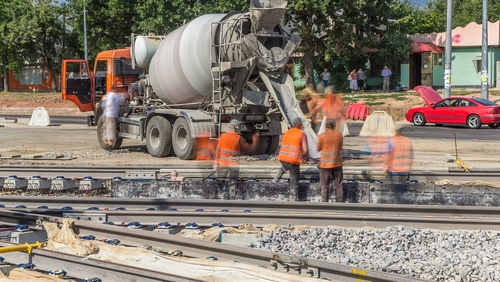
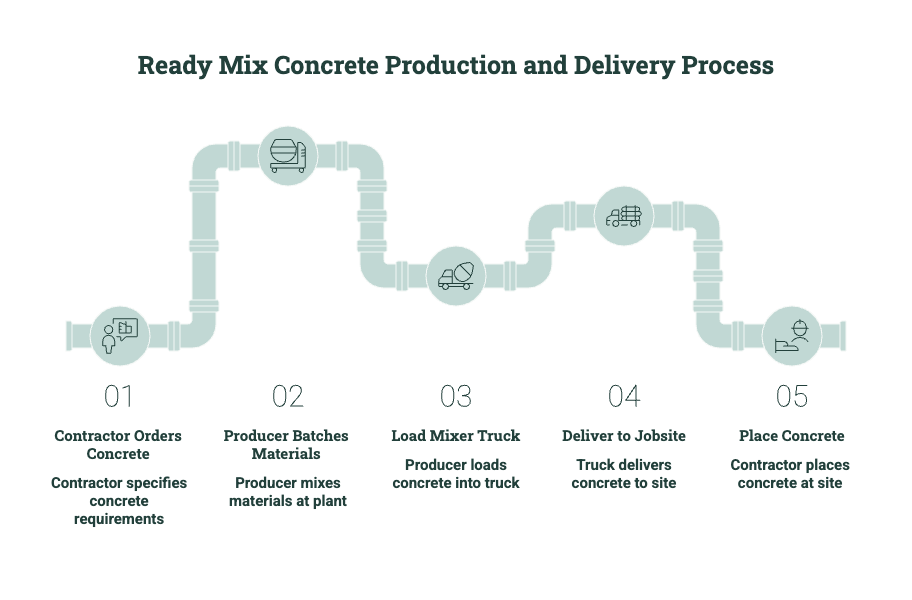
Ready mix concrete is concrete that is professionally designed, batched, and delivered to a project site in a ready-to-place condition. Instead of mixing cement, sand, stone, and water by hand on the job site, customers order a specific concrete mix from a ready mix producer. The producer batches the materials at a concrete plant, loads the mix into a truck, and delivers it to the job.
Ready mix concrete is used for sidewalks, driveways, foundations, slabs, roads, bridges, warehouses, high-rise buildings, schools, hospitals, data centers, and infrastructure projects. It is popular because it gives contractors better consistency, better quality control, faster placement, and access to mixes designed for specific strength, durability, and workability needs.
The ready mix market is also changing. Contractors, owners, engineers, DOTs, and public agencies are asking for more than strength and slump. They are increasingly asking for Environmental Product Declarations, GWP values, low-carbon concrete options, project carbon reports, and proof that the concrete meets both performance and sustainability requirements.
Key Takeaways
- Ready mix concrete is made for a specific job. A driveway mix, warehouse slab mix, bridge deck mix, foundation mix, and high-rise structural mix may all have different strength, slump, air, cement, aggregate, and admixture requirements.
- The most important ordering details are strength, slump, air, exposure, placement method, volume, delivery timing, and finish requirements. If these details are wrong, the concrete may be harder to place, finish, test, or approve.
- Ready mix is not just “wet concrete in a truck.” It is a controlled material designed around engineering requirements, local materials, plant operations, delivery time, weather, and field conditions.
- Low carbon concrete is becoming part of ready mix procurement. More projects now ask for EPDs, GWP data, SCM content, cement type, and documentation showing the carbon footprint of a mix.
What Is Ready Mix Concrete?
Ready mix concrete is concrete that is produced at a concrete batch plant and delivered to a project site in a fresh, workable state. The customer does not mix the concrete from scratch on site. Instead, the ready mix producer controls the ingredients, proportions, batching, and delivery process.
A ready mix concrete order is usually based on a mix design. The mix design tells the producer how much cement, supplementary cementitious material, sand, stone, water, and admixtures to use. It also defines performance requirements like compressive strength, slump, air content, exposure class, and sometimes water-cement ratio.
Ready mix concrete is used because it is more consistent than hand-mixed or site-mixed concrete for most construction projects. The producer can batch materials accurately, track quality, adjust for moisture, and deliver a mix that is designed to meet the project specification.
Ready mix concrete is not one product. It is a custom material designed for a specific use.
Ready Mix vs. Concrete: What Is the Difference?
Concrete is the material. Ready mix is the way the concrete is produced and delivered. In other words, ready mix concrete is still concrete, but it is made at a professional plant and delivered to the jobsite instead of being mixed manually on site.
Concrete is made from cement, water, fine aggregate, coarse aggregate, and often admixtures or supplementary cementitious materials. Ready mix producers combine those ingredients in controlled proportions. The result is a fresh concrete mix that can be placed into forms, slabs, footings, pavements, walls, or other structures.
For small home repairs, bagged concrete may be enough. For larger work like driveways, slabs, foundations, commercial buildings, or public infrastructure, ready mix is usually the better choice because it provides better consistency, volume, speed, and quality control.
.png)
What Is Ready Mix Concrete Made Of?
Ready mix concrete usually includes five main ingredient groups: cementitious materials, aggregates, water, admixtures, and sometimes fibers or specialty materials. Each ingredient affects how the concrete behaves. A small change in one ingredient can change strength, workability, set time, durability, finishability, and carbon footprint.
Cementitious materials
Cement is the main binder in concrete. When cement reacts with water, it forms a hardened paste that binds the aggregates together. Many ready mix designs also use supplementary cementitious materials, or SCMs, such as fly ash, slag, silica fume, natural pozzolans, or calcined clay.
Cementitious materials are important for strength and durability, but they are also a major driver of concrete’s carbon footprint. That is why low-carbon concrete often focuses on cement reduction, portland-limestone cement, SCMs, and better mix optimization.
Aggregates
Aggregates are the sand, gravel, crushed stone, or other granular materials in concrete. They make up most of the volume of a typical ready mix concrete batch. Aggregates affect workability, strength, shrinkage, finishability, pumpability, and cost.
Good aggregate gradation can reduce the amount of paste needed in the mix. That matters because paste contains cementitious material, and cementitious material usually drives both cost and GWP. Better aggregate packing can help producers design lower-carbon mixes without sacrificing field performance.
Water
Water activates cement hydration and helps make the concrete workable. Too little water can make concrete hard to place. Too much water can reduce strength, increase shrinkage, and create durability problems.
That is why water-cement ratio matters. The water-cement ratio compares the amount of water to the amount of cementitious material. Lower water-cement ratios generally support better strength and durability, but the mix still has to be workable enough to place and finish.
Admixtures
Admixtures are chemicals added to concrete to change how it behaves. They can improve workability, reduce water demand, control set time, entrain air, improve pumpability, or support high-performance mixes. Common admixtures include water reducers, superplasticizers, accelerators, retarders, air-entraining admixtures, and corrosion inhibitors.
Admixtures are especially important for modern ready mix concrete. They can help producers reduce cement paste, use SCMs more effectively, keep concrete workable, and meet demanding project requirements.
Fibers and specialty materials
Some ready mix concrete includes fibers, color, corrosion inhibitors, shrinkage-reducing admixtures, lightweight aggregates, recycled materials, or other specialty ingredients. These are usually used for specific applications. For example, fibers may help control plastic shrinkage cracking or improve toughness in slabs.
How Ready Mix Concrete Is Made
Ready mix concrete starts with a mix design. The producer determines the right proportions of cementitious materials, aggregates, water, and admixtures based on the project requirements. The plant then weighs or measures each ingredient and combines them into a batch.
At a central mix plant, the concrete may be mixed before it is loaded into the truck. At a dry batch plant, the ingredients are loaded into the truck and mixed in the rotating drum. Either way, the goal is to deliver concrete that arrives at the jobsite within the required slump, air, temperature, and performance range.
Ready mix production depends on timing. Concrete begins reacting once water and cementitious materials are combined. The producer, dispatcher, driver, contractor, and crew all need to coordinate so the concrete can be delivered, placed, consolidated, finished, and cured properly.
.png)
Common Types of Ready Mix Concrete
There are many types of ready mix concrete because different projects need different performance. A residential driveway does not need the same mix as a bridge deck or data center slab. The right mix depends on strength, durability, exposure, placement method, finish, schedule, and engineering requirements.
Standard ready mix concrete
Standard ready mix concrete is used for everyday applications such as sidewalks, driveways, slabs, curbs, foundations, and general construction. It is usually designed around a specified compressive strength and workability requirement. The goal is predictable, reliable performance.
High-strength concrete
High-strength concrete is used when the structure needs greater load capacity or special performance. It may be used in columns, high-rise buildings, bridges, industrial floors, and heavily loaded structural elements. These mixes often require more careful material selection, admixtures, and quality control.
Air-entrained concrete
Air-entrained concrete contains tiny air bubbles that help protect the concrete during freeze-thaw cycles. It is common in exterior flatwork, pavements, sidewalks, driveways, and northern climates. Air content must be controlled carefully because too little air can reduce durability and too much air can reduce strength.
Flowable or pumpable concrete
Flowable or pumpable mixes are designed to move through pumps, hoses, or congested reinforcement without segregation. These mixes need good aggregate gradation, the right paste volume, and often water-reducing admixtures. Pumpability matters on commercial, high-rise, and infrastructure projects.
Self-consolidating concrete
Self-consolidating concrete, or SCC, is highly flowable and can fill forms with little or no vibration. It is used where there is dense reinforcement, complex formwork, architectural finishes, or precast production needs. SCC requires careful mix design because flowability and stability must be balanced.
Low carbon concrete
Low carbon concrete is designed to reduce Global Warming Potential while still meeting performance requirements. It may use SCMs, portland-limestone cement, optimized aggregate gradation, reduced cement content, admixtures, or other strategies. The mix still needs to meet strength, durability, placement, finishing, and project specifications.
.png)
Important Ready Mix Concrete Terms
Ready mix concrete has its own language. Understanding the basic terms makes it much easier to order the right mix, review a submittal, or respond to a project spec.
Compressive strength
Compressive strength is the load concrete can carry before failure, usually measured in psi in the U.S. or MPa in many other markets. Common strengths include 3,000 psi, 4,000 psi, 5,000 psi, 25 MPa, 30 MPa, and 35 MPa. Higher strength often requires more cementitious material, lower water-cement ratio, better quality control, or different admixtures.
Slump
Slump measures how workable or fluid fresh concrete is. A higher slump usually means the concrete flows more easily. However, adding water on site to increase slump can reduce strength and durability unless the mix is designed and controlled properly.
Air content
Air content is the amount of entrained or entrapped air in the concrete. For freeze-thaw durability, exterior concrete often needs controlled entrained air. Air content affects durability, strength, finishability, and acceptance testing.
Water-cement ratio
Water-cement ratio, often written as w/c or w/cm, compares the amount of water to the amount of cementitious material. It is one of the most important factors in strength and durability. Lower ratios often support better durability, but they usually require admixtures or good aggregate design to maintain workability.
SCMs
SCMs are supplementary cementitious materials. Common SCMs include fly ash, slag, silica fume, natural pozzolans, calcined clay, and glass pozzolans. They can improve performance and reduce GWP when used correctly.
GWP
GWP stands for Global Warming Potential. In ready mix concrete, it usually refers to the carbon footprint of a mix, often shown as kg CO2e per cubic yard or kg CO2e per cubic meter. GWP is the number owners and agencies often use when comparing low-carbon concrete options.
EPD
An Environmental Product Declaration is a verified document that reports the environmental impacts of a product. For ready mix concrete, an EPD usually reports GWP and other environmental impact categories for a specific mix, plant, or product group.
How to Order Ready Mix Concrete
Ordering ready mix concrete starts with knowing what the project needs. The producer needs more than just the number of yards. They need enough information to supply concrete that can be placed, finished, tested, and approved.
The most important details are volume, strength, slump, air content, exposure conditions, placement method, delivery location, schedule, and finish requirements. If the project has a formal specification, the producer should review the relevant concrete section before confirming the mix. If the project requires EPDs, GWP limits, SCM restrictions, or special documentation, that should be discussed before the pour.
What to tell the ready mix producer
- Project location
- Pour date and time
- Estimated volume
- Application, such as driveway, slab, footing, wall, column, pavement, or deck
- Required compressive strength
- Slump or workability requirement
- Air requirement
- Exposure conditions
- Placement method, such as chute, buggy, pump, or conveyor
- Finish type
- Any admixture requirements
- Any EPD, GWP, or low-carbon concrete requirements
- Site access limitations
- Truck spacing and placement rate
The more complete the information, the better the producer can help. Ready mix concrete is perishable, time-sensitive, and project-specific. Good communication prevents delays, rejected loads, and field problems.
.png)
How Much Ready Mix Concrete Do You Need?
Concrete volume is usually ordered in cubic yards in the U.S. or cubic meters in many other countries. To estimate volume, multiply length × width × thickness, then convert into the right unit. Contractors usually add a small waste factor because subgrade variation, form tolerances, and over-excavation can increase the actual amount needed.
For a slab, the basic formula is: Length × Width × Thickness = Volume
For example, a 40 ft by 20 ft slab that is 6 inches thick is:
40 × 20 × 0.5 ft = 400 cubic feet
400 ÷ 27 = 14.8 cubic yards
Most contractors would order a little more than the exact calculated amount. The right waste factor depends on the job, subgrade, form accuracy, and risk tolerance. Running short during a pour can create cold joints and scheduling problems.
Ready Mix Concrete Cost: What Affects Price?
Ready mix concrete pricing depends on more than the base price per cubic yard or cubic meter. Strength, cement content, admixtures, SCMs, delivery distance, fuel, short-load fees, waiting time, pump requirements, weekend work, and local material costs can all affect the final price.
Higher-strength mixes often cost more because they may require more cementitious material, lower water-cement ratio, admixtures, or more testing. Specialty mixes like self-consolidating concrete, fiber-reinforced concrete, low-shrinkage mixes, colored concrete, or low-carbon optimized mixes may also have different pricing.
Low carbon concrete does not always cost more, but it can. Some strategies, like reducing unnecessary cement through better aggregate gradation, may lower both cost and GWP. Other strategies, like special SCMs, carbon mineralization, or specialty admixtures, may add cost depending on the region and project.
The cheapest mix is not always the best value. The right mix is the one that meets the job, places well, performs long term, and avoids rework.
Ready Mix Concrete Delivery: What Happens on Pour Day?
On pour day, timing and coordination matter. The ready mix truck leaves the plant with concrete that has a limited working window. The crew needs to be ready before the truck arrives. Forms, subgrade, reinforcement, vapor barrier, pump, tools, testing agency, and finishers should all be prepared.
When the truck arrives, the crew or inspector may check the ticket, mix ID, batch time, slump, air, temperature, and other required details. If the concrete needs testing, samples may be taken for cylinders or other field tests. If the concrete does not meet the specified range, the team needs to address the issue before placement continues.
Good delivery planning helps prevent cold joints, delays, rejected loads, and quality issues. Truck spacing should match the crew’s placement rate. Too many trucks can create waiting time. Too few trucks can interrupt placement and finishing.
.png)
Quality Control in Ready Mix Concrete
Quality control is one of the biggest reasons to use ready mix concrete. Producers track materials, batch weights, moisture, admixtures, plant performance, truck timing, and test results. This helps keep concrete consistent from load to load.
Common quality control checks include slump, air content, temperature, unit weight, compressive strength, and sometimes set time or maturity. On larger projects, the producer may also provide trial batches, mix submittals, historical strength data, and EPDs. The testing agency, contractor, engineer, and producer all play a role in making sure the concrete meets the specification.
Quality control does not end at the plant. Jobsite practices matter too. Adding too much water, delaying placement, poor consolidation, improper finishing, or inadequate curing can hurt concrete performance even if the mix was batched correctly.
Ready Mix vs. Site-Mixed Concrete
Site-mixed concrete is mixed at the jobsite using individual ingredients or bagged materials. It can be useful for very small jobs, remote locations, fence posts, minor repairs, or situations where truck access is difficult. But for larger or structural work, ready mix usually offers better consistency and quality control.
Ready mix concrete is better suited for projects where volume, strength, timing, and performance matter. It also gives contractors access to engineered mixes, admixtures, SCMs, testing data, and delivery support. For commercial and public work, ready mix is often required by the project specification.
The main advantage of site-mixed concrete is flexibility on very small jobs. The main advantage of ready mix is reliability at scale. If the project is large enough to require multiple batches, testing, strength documentation, or engineered performance, ready mix is usually the safer choice.
.png)
Ready Mix Concrete Applications
Ready mix concrete is used across residential, commercial, industrial, and infrastructure construction. The mix design changes depending on the application. A driveway mix needs different performance than a bridge deck or warehouse floor.
Residential
Ready mix is commonly used for driveways, patios, sidewalks, garage slabs, footings, foundations, pool decks, and retaining walls. Residential projects often focus on workability, finishability, durability, and appearance. In freeze-thaw climates, air entrainment and curing are especially important.
Commercial
Commercial ready mix is used for building slabs, foundations, columns, walls, parking lots, tilt-up panels, paving, and structural concrete. These projects often have tighter specifications, testing requirements, and schedule demands. Contractors may also need EPDs, LEED documentation, or low-carbon options.
Industrial
Industrial projects may need concrete for heavy-duty slabs, equipment foundations, containment areas, warehouses, distribution centers, manufacturing facilities, and data centers. These mixes may need higher durability, abrasion resistance, flatness, strength, or shrinkage control. Large-volume pours also make GWP and project carbon reporting more important.
Infrastructure
Infrastructure ready mix is used for roads, bridges, tunnels, transit, airports, water treatment plants, utility work, curbs, sidewalks, and public works. These projects often involve DOT specifications, agency approval, testing, documentation, and sometimes EPD or Buy Clean requirements.
Low Carbon Ready Mix Concrete
Low carbon ready mix concrete is concrete designed to reduce GWP while still meeting performance requirements. It may use portland-limestone cement, SCMs, optimized cement content, improved aggregate gradation, admixtures, recycled materials, or other strategies. The goal is not simply to make the mix “green.” The goal is to make it lower carbon and still practical in the field.
This matters because concrete is used in huge volumes. A small GWP reduction per cubic yard or cubic meter can become a large reduction across a building, road, bridge, warehouse, or data center. That is why project teams are starting to ask for EPDs and GWP values as part of procurement.
Low carbon concrete works best when the spec allows flexibility. If a spec requires high cement minimums, limits SCMs too aggressively, or demands unnecessary early strength, producers may not be able to optimize the mix. Performance-based specifications can help producers meet strength, durability, and GWP goals together.
.png)
Common low-carbon ready mix strategies
- Use portland-limestone cement where accepted
- Use SCMs such as slag, fly ash, natural pozzolans, silica fume, or calcined clay
- Optimize aggregate gradation to reduce paste demand
- Reduce unnecessary cementitious content
- Use admixtures to maintain workability
- Allow later-age strength when possible
- Use supplier-specific EPD data
- Reduce delivery impacts when A4 is included
- Match the mix to the actual performance need
EPDs and GWP: Why Ready Mix Producers Are Being Asked for Carbon Data
More projects are asking ready mix producers for Environmental Product Declarations and GWP data. Public agencies may require EPDs through Buy Clean policies, DOT programs, or federal procurement. Private owners may ask for EPDs for data centers, warehouses, universities, hospitals, and corporate buildings.
An EPD helps project teams understand the environmental impact of a concrete mix. For ready mix, the most watched number is usually GWP. If the project has a GWP limit, the producer needs to show that the proposed mix is below the required threshold.
This is becoming part of normal bidding. A contractor may ask for the mix design, strength history, EPD, GWP value, baseline comparison, and project carbon report. Producers that can respond quickly with organized data are easier to work with.
The ready mix producer of the future will not only deliver concrete. They will deliver performance data, carbon data, and documentation.
What Ready Mix Producers Need to Track
Ready mix producers need clean data to support modern project requirements. This includes traditional production data and newer environmental data. The more organized the data, the easier it is to respond to bids, EPD requests, GWP limits, and customer questions.
Producers should track mix designs, material sources, cement type, SCM content, aggregate gradation, admixtures, plant data, transportation assumptions, strength results, EPDs, and GWP values. They should also know which mixes are commonly used, which mixes have verified EPDs, and which mixes can be offered as lower-carbon options.
This is not just for sustainability teams. Sales, QC, technical services, dispatch, operations, and leadership all need access to the right information. When a customer asks for a low-carbon mix by Friday, the producer should not have to start from scratch.
.png)
How Ready Mix Producers Can Stand Out
Ready mix is a competitive market. Producers often compete on price, service, reliability, quality, relationships, and technical support. Carbon data is becoming another way to stand out.
A producer that can explain EPDs, GWP, mix options, and performance tradeoffs becomes more valuable to contractors and owners. Instead of simply saying “yes” or “no” to a low-carbon request, the producer can show options. They can explain the difference between a standard mix, a 10% lower-GWP mix, and a more aggressive low-carbon option.
The best producers will make carbon practical. They will help project teams understand what is possible, what the tradeoffs are, and how to meet the spec without creating field problems.
Ways producers can differentiate
- Provide verified EPDs for common mixes
- Offer lower-GWP alternatives by strength class
- Create project carbon reports by mix and volume
- Help contractors understand baseline reduction math
- Review specs for conflicts between carbon goals and prescriptive requirements
- Support performance-based alternatives
- Train sales and QC teams on EPD and GWP basics
- Keep documentation ready before bid day
.png)
How Climate Earth Helps Ready Mix Producers
Climate Earth helps ready mix and cement producers generate and manage verified EPDs faster. As EPD requests become more common across public tenders, infrastructure, commercial work, data centers, and low-carbon procurement, producers need a faster way to turn plant and product data into usable environmental documentation.
Climate Earth supports Type III verified EPD workflows for ready mix and cement producers, with standards-aligned reporting and expert LCA support. Producers can keep plant, product, and EPD data organized so they are ready when customers, contractors, public agencies, or project teams ask for verified environmental product data.
Why producers choose Climate Earth
- Built for ready mix and cement EPD generation
- Supports Type III verified EPD workflows
- Helps producers respond faster to EPD requests
- Keeps plant and product data organized
- Supports ISO 14025 and EN 15804+A2-aligned reporting
- Helps prepare for evolving CPR, DPP, and low-carbon procurement expectations
- Backed by expert LCA support
Ready to get started? Generate verified EPDs faster with software built for ready mix and cement producers. Book a demo to see how Climate Earth can help your team manage EPD generation, standards compliance, and environmental product data in one workflow.
FAQ: Ready Mix Concrete
What is ready mix concrete?
Ready mix concrete is concrete that is produced at a batch plant and delivered to a jobsite in a fresh, workable condition. It is made from cementitious materials, aggregates, water, and admixtures based on a specific mix design.
Is ready mix concrete the same as concrete?
Ready mix concrete is a type of concrete. The difference is that ready mix is professionally batched at a plant and delivered by truck, while concrete can also be mixed manually or on site.
What is ready mix concrete used for?
Ready mix concrete is used for driveways, sidewalks, slabs, foundations, walls, columns, roads, bridges, warehouses, data centers, hospitals, schools, and infrastructure projects.
How do I order ready mix concrete?
To order ready mix concrete, you need the project location, volume, strength, slump, air requirement, placement method, delivery time, exposure conditions, and application. For engineered projects, you should also provide the project specification.
What strength ready mix concrete do I need?
The required strength depends on the project. Residential flatwork may use lower strengths than structural columns, bridges, industrial slabs, or high-rise construction. Always follow the project specification or engineer’s requirements.
What does slump mean in ready mix concrete?
Slump measures the workability or flow of fresh concrete. Higher slump is easier to place, but adding water to increase slump can reduce strength and durability if not controlled properly.
What is air-entrained concrete?
Air-entrained concrete contains tiny air bubbles that help protect concrete from freeze-thaw damage. It is commonly used for exterior concrete in cold climates.
What is low-carbon ready mix concrete?
Low-carbon ready mix concrete is designed to reduce GWP while still meeting performance requirements. It may use SCMs, portland-limestone cement, optimized aggregate gradation, admixtures, or reduced cement content.
What is an EPD for ready mix concrete?
An EPD is a verified environmental report that shows the carbon footprint and other environmental impacts of a concrete mix or product. Ready mix EPDs are increasingly requested on public and private projects.
What is GWP in ready mix concrete?
GWP stands for Global Warming Potential. It is the carbon footprint of the concrete mix, usually reported as kg CO2e per cubic yard or cubic meter.
Is ready mix concrete better than bagged concrete?
Ready mix concrete is usually better for larger or engineered projects because it offers better consistency, quality control, volume, and performance options. Bagged concrete can work for small repairs, fence posts, and minor DIY work.
How long does ready mix concrete take to cure?
Concrete gains strength over time. It may be hard enough for light use within a few days, but standard strength testing often happens at 7 and 28 days. Full curing and long-term strength development can continue beyond that, depending on the mix and conditions.
Can ready mix concrete be customized?
Yes. Ready mix concrete can be customized for strength, slump, air, exposure, pumpability, set time, color, fibers, durability, finishability, and low-carbon requirements.
Summary: Ready Mix Concrete Is Becoming More Technical, More Data-Driven, and More Important
Ready mix concrete is one of the most important materials in modern construction. It is used in homes, roads, bridges, warehouses, hospitals, data centers, schools, commercial buildings, and public infrastructure. It gives contractors a reliable way to place concrete that is designed, batched, delivered, and tested for specific project needs.
The basics still matter: strength, slump, air, water-cement ratio, aggregates, admixtures, delivery timing, placement, finishing, and curing. But the market is also changing. Ready mix producers are now being asked for EPDs, GWP values, low-carbon mix options, and project carbon documentation.
The producers that win in this market will be the ones that can do both. They will deliver concrete that works in the field and documentation that works in the bid. Ready mix is no longer just about getting concrete to the jobsite. It is about delivering performance, reliability, and data that helps projects move forward.
Related articles

LEED v5 Requirements: What They Mean for Low Carbon Concrete

How to Read a Concrete EPD: Quick, Expert Guide