

LEED v5 Requirements: What They Mean for Low Carbon Concrete

Leadership in Energy and Environmental Design (LEED) is a worldwide green building rating system in use across 185 countries. In April of 2025, U.S. Green Building Council (USGBC) released LEED version 5, which places decarbonization at the center of green building certification, directly targeting high-impact materials like concrete. Here's what concrete manufacturers need to know.
What Is LEED v5?
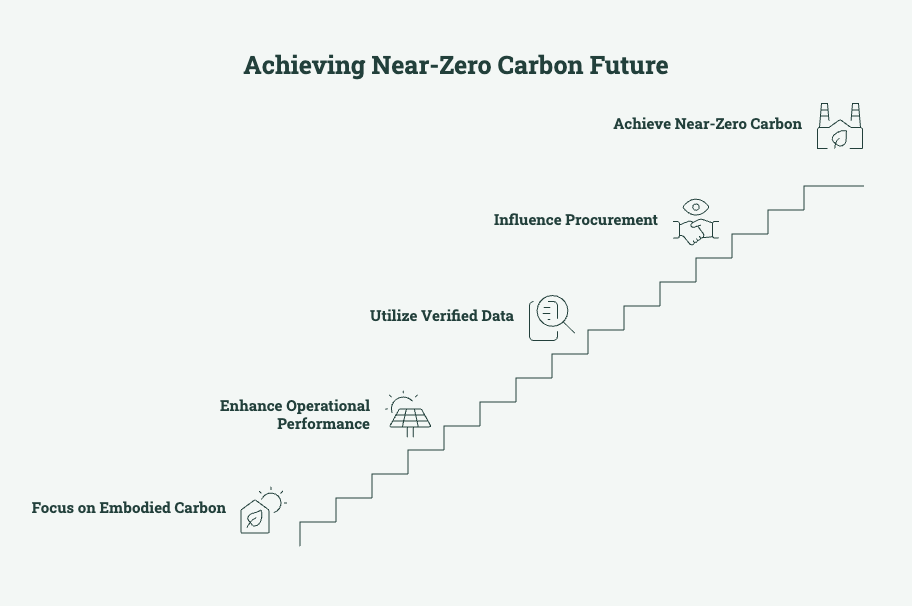
LEED v5 is the latest green building rating system focused on achieving a near-zero carbon future. It places stronger emphasis on embodied carbon, operational performance, and verified data like EPDs, pushing project teams to measure and reduce impact across the full building lifecycle.
For the construction industry, LEED v5 acts as a market signal and de facto standard, shaping how projects are designed, specified, and bid. It pushes owners, architects, and contractors to prioritize low-carbon materials, verified data, and lifecycle performance, accelerating the shift toward embodied carbon reduction.
As a result, it influences procurement decisions across both public and private projects. Meaning suppliers who can provide transparent EPD data and lower-carbon solutions are more likely to be selected.
LEED v5 vs LEED v4: Key Differences
Essentially, LEED v5 focuses on long-term building performance and systems with new requirements around decarbonization, ecological conservation, and quality of life, whereas LEED v4 uses structured credits across categories like energy, water, materials, and indoor environmental quality. With that, the new v5 introduces new LEED credits that reward active management, so teams now earn points for specific strategies like:
- Transportation Demand Management (reducing car trips).
- Equitable Development (benefiting the local community).
- Resilience (building structures that can survive extreme weather).
- Quality-of-Life (improving health and comfort for occupants).
This change matters because it mandates a carbon assessment, a climate resilience assessment, and a human impact assessment early in the design phase, affecting compliance and project costs. For concrete producers, projects will likely have more strict carbon limits on every cubic yard of concrete to meet compliance.
.png)
LEED v5 Impact Areas Explained
While LEED v5 is a big shift, it still uses the foundation from v4 and v4.1. It’s possible to still see the familiar categories, like location & transportation, sustainable sites, water efficiency, materials & resources (where concrete, cement, and other construction materials are mentioned, and indoor environmental quality. But, the difference is that all those categories are now graded based on how they hit the target areas below:
1. Decarbonization
This is the most important area for concrete producers as it speaks directly to the energy the building uses, also known as Operational Carbon, and the carbon emitted to make the materials, Embodied Carbon. Another reason to pay a closer look to this is because 50% of LEED v5 credits are dedicated to decarbonization, including operational carbon, embodied carbon, and transportation emissions, with minimum thresholds for carbon reporting in BD+C projects.
Projects under LEED v5 must develop a 25-year projected carbon assessment to understand and reduce long-term direct and indirect carbon emissions from various sources.
To summarize the impact for concrete, the project development will have a "carbon budget." If concrete manufacturers' mix is high-carbon, the project team will have to cut carbon somewhere else to balance the books.
2. Ecological Conservation and Restoration
25% of LEED v5 credits focus on being "Nature Positive." This means minimizing harm to ecosystems and actually improving local biodiversity through native restoration and pollinator pathways.
Concrete Impact: Here, it's all about the raw material extraction.
- Using materials like fly ash, slag, or glass pozzolans is a huge win here. It reduces the need for "virgin" material extraction (mining) and keeps industrial waste out of landfills.
- To ensure sustainable raw material sourcing, the project team will need documentation on where the sand and aggregate are mined to ensure they aren't coming from high-risk or protected ecosystems.
3. Quality of Life
A quarter of LEED v5 credits focus on Quality of Life, which covers health, equity, and resilience. The goal is to make buildings that are healthier for the people inside and tough enough to handle a changing climate.
Concrete Impact:
- LEED v5 rewards buildings that demonstrate structural resilience to survive floods, fires, or extreme heat. This often means stricter requirements for concrete strength and durability so the structure remains the "safe haven" for the community.
- To meet "Human Health" goals, the team will be checking the curing compounds, sealers, and admixtures used. They’ll need to be "low-VOC" and non-toxic to ensure high indoor air quality.
- Taking into consideration social equity, which can include fair labor practices and safety for the crews on-site during the pour.
.png)
LEED v5 Rating Systems: BD+C, ID+C, and O+M
LEED v5 is not a single rating system but a family of updated systems tailored to different project types, all aligned under the same impact-based comprehensive framework designed for measurable outcomes.
- LEED v5 for Building Design + Construction (LEED BD+C): Covers new construction, major renovations, and core and shell projects. This system carries the most significant Embodied Carbon requirements. Projects are now required to perform a Whole-Building Life-Cycle Assessment (WBLCA). For structural mixes, the focus will be on reducing the Global Warming Potential (GWP) per cubic yard.
- LEED v5 for Interior Design + Construction (ID+C): For tenant fit-outs involving terrazzo, toppings, or precast, the focus shifts to Material Ingredient Reporting. In addition to carbon, the project team will scrutinize Health Product Declarations (HPDs) for admixtures and sealers to ensure they meet strict VOC and chemical transparency thresholds.
- LEED v5 for Operations and Maintenance (O+M): Focuses on existing buildings, long-term operational performance, retrofits, and ongoing carbon management through energy metering, performance tracking, and periodic recertification every five years. The U.S. Green Building Council (USGBC) and the Portland Cement Association (PCA) have released technical guides for LEED v5 that specifically link material durability and thermal performance to long-term carbon targets:
- Concrete that is engineered for high durability, resisting cracks, spalling, and rebar corrosion, is the best way to ensure a building hits its 25-year carbon targets.
- High-quality concrete provides thermal mass, which helps the building's energy efficiency positively affecting its HVAC system, for example directly lowering its Operational Carbon score. Another example are solar and wind projects, massive renewable energy initiatives that require specialized concrete.
Registration for LEED v5 is now open, but registration for the older v4 and v4.1 systems will close on June 30, 2026. Because projects have until 2032 to actually finish certification, project teams and manufacturers will be operating in a mixed-version environment for several years.
It is critical to check which version a project is using before starting submittals, as LEED v5 requires much more specific data and EPDs from each plant than the older systems did.
.png)
How Concrete and Cement Producers Can Adapt to LEED v5
Since LEED v5 is now the new standard, concrete and cement producers serving BD+C and O+M projects will feel the earliest pressure to document and reduce embodied carbon performance.
Aside from optimizing for cement efficiency and ensuring sustainable raw material sourcing, to stay competitive and compliant, producers should focus on:
1. Product-Specific EPDs
In v4, they could often get away with industry-average data. Under LEED v5, producers need to provide Product-Specific Type III Environmental Product Declarations (EPDs). A third-party verified report that shows the exact carbon footprint (GWP) of a specific mix from a specific plant. Without this, the project team has to use a "penalty" value (average + 10%), which makes it harder for them to hit their carbon budget.
2. Shift to Performance-Based Specifications
Producers need to collaborate with engineers on performance-based mixes that hit strength targets with less cement. They need to lead the conversation by offering Low-Carbon Mixes (using SCMs like Slag, Fly Ash, or Type 1L cement) as the standard option for BD+C projects.
Because v5 requires a Carbon Assessment early in the design phase, it’s needed to get mix data to the architects before the job is even out for bid, so they can build their 25-year carbon models around the concrete producer specific products.
Using concrete-specialized software (like Climate Earth) to generate these EPDs allows producers to provide real-time carbon tracking for every mix. That way, the project team can accurately complete their mandatory Whole Building Life-Cycle Assessment (WBLCA).
.png)
How Climate Earth Supports LEED v5 Compliance
For producers pursuing a LEED certification, having a specialized software platform allows them to have high-quality, auditable data across all plants and mixes. Climate Earth’s unified software platform
- Has an EPD Generator streamlining production data into verified reports in seconds.
- Optimize mixes using AI tools to find the sweet spot between low cost and low carbon.
- Provides real-time visibility allowing producers to track exactly where their carbon footprint stands across the entire project.
The benefits?
- If a LEED auditor questions the carbon numbers, Climate Earth provides a "third-party verified" paper trail protecting the project team from losing their certification points due to bad data.
- Climate Earth's real-time carbon dashboards and reports can easily show a General Contractor exactly how much carbon is being "saved" across the entire job in real-time. This is a massive selling point for projects aiming for Gold or the new LEED Platinum certification.
.png)
Frequently Asked Questions About LEED v5 and Concrete
Here are answers to common questions concrete and cement producers have about LEED v5 requirements and timelines.
Is LEED v5 mandatory?
LEED remains voluntary, but many public and private owners—cities, universities, corporations—are adopting LEED v5 as their standard, effectively making embodied carbon data a requirement to bid on certain projects and help you navigate and interact with requirements.
What’s the business case for concrete producers?
Producers delivering low-carbon, well-documented mixes gain competitive advantage, qualify for more projects, and often command better margins for high-performing, LEED-aligned products that support a better future.
What is a LEED v5 scorecard?
The LEED v5 Scorecard is the project's official "grading sheet." It is what the project team uses to track every point needed to earn LEED certification. For producers, the scorecard is the checklist that determines which mix designs and EPDs you are contractually required to provide.
Do I need to have zero waste operations to get LEED v5 certified?
No, you don't need to be 100% waste-free, but a "Zero Waste" plan is now mandatory. In LEED v5, "Project Planning for Zero Waste" is a mandatory prerequisite. This means you can't get certified at all without a formal plan to reduce and divert waste.
LEED v5 and The New Standard for Concrete Producers
The global move toward stricter environmental legislation and net-zero buildings is here, and the entire project team, from manufacturers and architects to contractors and engineers, needs to adapt fast. The financial case for this shift is clear. LEED-certified buildings show an average of 21.4% higher market sales prices and 11% higher rental rates compared to non-certified buildings.
To secure bids in this competitive environment, concrete producers pursuing LEED certification must move beyond traditional submittals. They need to implement a robust sustainability strategy and specialized software, like Climate Earth.
Ready to see how your plant can lead the LEED v5 market? Book a demo with Climate Earth today to see how automated EPDs and real-time carbon tracking can help you win more bids and stay ahead of the curve.
Related articles

How to Read a Concrete EPD: Quick, Expert Guide

Concrete Sustainability: Guide to Sustainable Concrete & Project Examples