


Net Zero Building Examples: Practical Insights for Concrete Producers
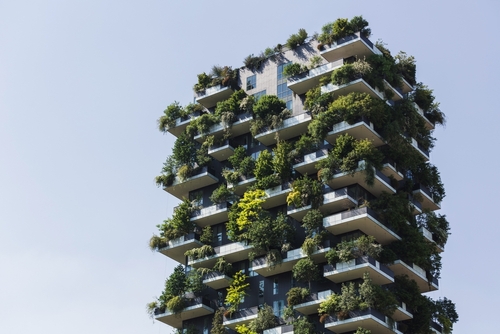
Net zero buildings are structures designed to eliminate or offset all operational and embodied carbon emissions over their lifecycle. They combine high efficiency with low-carbon materials and renewable energy. For construction professionals and ready-mix producers, they serve as real-world proof of demand, guiding scalable, profitable adoption of lower-carbon concrete solutions. But what does this look like in practice?
What you’ll learn:
- Real embodied carbon metrics (kg CO₂e/m³) from actual net zero buildings worldwide
- How mixes were engineered to meet certification requirements while maintaining performance
- Practical reporting tactics for multi-plant portfolios
- How to turn carbon compliance from a burden into a competitive edge
What Is a Net Zero Building?
Net zero buildings are structures designed to produce as much energy as they consume over a 12-month period, primarily through on-site renewable energy systems. This balance between energy use and generation is achieved by reducing demand first, then offsetting remaining consumption with clean energy.
Achieving this balance requires early and coordinated collaboration between architects, engineers, designers, and construction teams to integrate efficiency strategies from the outset. These typically include solar energy systems, geothermal solutions, and high-performance HVAC technologies.
Net zero buildings are closely linked to broader decarbonization goals, including reductions in both operational carbon (energy used during building operation) and embodied carbon (emissions from materials and construction).
How Net Zero Buildings Are Measured and Certified
Net zero building performance is measured through established certification frameworks that apply defined criteria for energy use, carbon emissions, and resource efficiency. These systems convert sustainability goals into standardized requirements that projects must meet to achieve certification.
Key certifications include the Living Building Challenge (LBC), LEED Zero, the Zero Carbon Building Standard, and BREEAM, each assess buildings on criteria that matter to regulators and markets, and sets its own benchmarks for energy use, water efficiency, and operational performance.
The Living Building Challenge is considered one of the most stringent green building certifications globally, requiring buildings to operate for 12 consecutive months using only on-site renewable energy sources.
How Ready-Mix and Concrete Producers Contribute to Net Zero buildings?
Ready-mix and concrete producers help reduce embodied carbon by using low-carbon mix designs and enhancing transparency through Environmental Product Declarations (EPDs). EPDs are tools that support accurate embodied carbon accounting in building assessments and certifications.
Sustainable building materials should have low embodied carbon, be durable, locally sourced when possible, and be recyclable or reusable. Leading standards such as LEED v4.1, BREEAM, and the ILFI Zero Carbon certification are increasingly adding embodied carbon limits. In addition, frameworks like the World Green Building Council's and national policies, such as California’s Buy Clean, the Dutch MPG, and the UKGBC Net Zero Carbon Buildings framework, now require the documentation of greenhouse gas emissions from building materials.
What this looks like in your RFQs and specifications:
- Max kg CO₂e/m³ limits per strength class (e.g., ≤300 kg CO₂e/m³ for C30/37 or 4,000 psi mixes) to align with GWP goals.
- Whole-building embodied carbon budgets that translate into tight mix specifications, ensuring emissions are kept within limits.
- Type III EPDs with quantified A1-A3 carbon footprint data aligned to EN 15804 or ISO 14025 standards for greater transparency.
- Requirements for submittals showing 28-day compressive strength histories alongside carbon metrics to balance performance and environmental impact.
- Scenario analyses requested via RFIs: “Can this C35/45 mix achieve ≤250 kg CO₂e/m³ with 55% GGBS while maintaining 4-hour strip time?” to evaluate the trade-offs between carbon reduction and mix performance.
[Should we mention LCA-ready data exports tools? Does Climate Earth currently support lifecycle assessments at any level?]
Assessing Net Zero Building Examples (Concrete Mix and Carbon Data)
This section highlights net-zero and near-net-zero buildings, focusing on embodied carbon and concrete mix strategies in some cases, while also featuring projects with innovative energy systems and sustainable design solutions. These examples showcase how construction professionals are addressing sustainability through both material innovation and holistic building strategies.
[Recommend adding a picture of some of the buildings mentioned if they’re royalty-free]
Bullitt Center, Seattle, USA
The Bullitt Center opened in 2013 as a 6-storey, 52,000 sq ft timber-framed commercial building often called “the greenest commercial building in the world.” Certified under the Living Building Challenge 2.0, it targets a 250-year lifespan through passive strategies including operable windows, natural ventilation, rainwater treatment, and a 242 kW PV canopy producing approximately 230,000 kWh annually. The building also features a 675-kilowatt photovoltaic array, which was the largest rooftop solar installation in Washington State at the time of its completion.
Focusing on concrete, the project required compliance with LBC’s Materials Petal Red List avoidance and aggressive embodied carbon reductions versus conventional Seattle baselines.
Representative mix data:
- Baseline conventional 30-35 MPa mixes: ~380-420 kg CO₂e/m³
- Bullitt Center structural slabs and foundations: ~250-280 kg CO₂e/m³
Strategy
- 40-50% SCM replacement (fly ash Class C/F and GGBFS)
- Low w/cm ratios (0.35-0.40)
- Cement factors around 250-300 kg/m³
The concrete met high-performance targets with 28-day strengths of 4,500-5,000 psi while focusing on low carbon. This required pre-qualifying mixes with verified 28-day strengths, slump flow for pumpability, and performance data for LBC petaling. One challenge was maintaining transparent gate-to-gate accounting, especially when reviewers pushed for even deeper reductions.
Having tools that allow producers to achieve low-carbon concrete mix designs, with fewer test batches and real-time insights, is essential for advancing these initiatives.
The Kendeda Building for Innovative Sustainable Design, Atlanta, USA
The Kendeda Building, completed in 2019 at Georgia Tech, is the first Living Building Challenge 3.1 certified facility of its scale in the Southeast. This 47,000 sq ft building is designed to be "net-positive," generating 140% of its own energy through a 330 kW solar canopy and recycling more water than it uses. To meet the rigorous Materials Petal requirements, the project team prioritized "Red List" chemical avoidance and a significant reduction in embodied carbon across all structural components.
Focusing on concrete, the project required a partnership with a local producer (Thomas Concrete) to deliver high-performance mixes that balanced the Southeast's humid climate with aggressive sustainability goals.
Representative Mix Data:
- 5,000 psi high-early strength mixes (approx. 1,600 cubic yards).
- Documented 30% lower carbon intensity than regional medians for educational facilities.
- 130 cubic yards of specialized previous concrete for on-site infiltration.
Strategy:
- The project utilized a high-volume blend of slag and fly ash to displace half of the Portland cement content(50% SCM replacement), significantly lowering the Global Warming Potential (GWP).
- The producer utilized carbon-curing technology (CarbonCure) to inject recycled into the mix, chemically converting it into a mineral that increases compressive strength.
- By fine-tuning the chemical admixtures, the producer ensured the high-SCM mixes achieved the necessary 28-day strength while meeting the contractor’s aggressive casting and stripping schedule.
Other Net Zero Buildings Examples Worth Looking Into
While most net zero buildings don’t always disclose detailed information about their concrete mixes, they still provide valuable insights into engineering and design strategies. These examples offer inspiration for leaders in the construction industry focused on sustainability. Here are some noteworthy buildings to explore:
Powerhouse Brattørkaia in Trondheim, Norway
Completed in 2019, Powerhouse Brattørkaia is an 18,000 sq m office building that produces more energy than it consumes, including during its construction and demolition phases. Located in sub-Arctic conditions with -20°C winters, it features a 775 kW PV array, geothermal heating, and passive design optimized for extreme climate change resilience.
The Powerhouse collaboration (Snøhetta, Skanska, and others) explicitly targeted life-cycle carbon emissions, including sustainable building materials, with published LCA results achieving BREEAM Outstanding.
Brock Environmental Center, Virginia Beach, USA
The Brock Environmental Center, opened in 2014, serves as a 10,500 sq ft headquarters for the Chesapeake Bay Foundation. Certified as a Living Building, it generates over 80% more energy than it consumes annually through solar and wind systems. Key sustainable features include:
- Two 10 kW wind turbines, each 70 feet tall, book-end the center that generate the remaining 30–40% of the building's electricity.
- A 45 kW photovoltaic array consisting of 168 solar panels is mounted on the south-facing roofs.
- 18 ground-source geothermal wells, drilled roughly 300 feet deep, to improve the efficiency of its heating and cooling systems.
The building also features a pioneering rainwater treatment system that allowed it to become the first commercial building in the continental United States permitted to treat harvested rainwater for potable (drinking) use.
The Unisphere, Silver Spring, Maryland, USA
The Unisphere Building in Maryland is one of the largest commercial net-zero buildings in the U.S. It features geothermal wells and nearly 3,000 solar panels, helping it produce more energy than it consumes. The building incorporates cutting-edge sustainable systems, including a focus on embodied carbon reduction through the use of low-carbon concrete and a commitment to high-performance building materials.
H2 Common Concrete and Carbon Patterns Across Net Zero Buildings
The Global Cement and Concrete Association (GCCA) has introduced a standardized Global Low Carbon Ratings (LCR) system to provide concrete producers with specific, measurable benchmarks for sustainable progress . This system uses Environmental Product Declarations (EPDs) to classify concrete into performance bands, ranging from a "Good Practice" baseline to a "Near Zero" AA rating . Detailed technical benchmarks for low-carbon procurement can be found in the GCCA's policy document.
Recurring technical patterns:

Understanding these patterns opens significant opportunities for concrete producers to actively engineer carbon outcomes. As the industry shifts from prescriptive specifications (rigid recipes) to performance-based ones, Technical Directors gain the flexibility to innovate. While managing high SCM levels and lower cement factors requires more rigorous testing and precise QA/QC protocols to ensure strength, it also grants producers more control over their mix efficiency.
However, capturing this opportunity requires a robust digital data infrastructure. By using scenario modeling software, Technical Directors can virtually "test" thousands of mix variations in seconds to find the most cost-effective way to hit a specific carbon limit. This digital transition allows plants to respond to green bids faster and with much higher accuracy than traditional, time-consuming manual trial batches.
Next Steps: Winning Projects with Stricter Carbon Requirements
Moving from reactive compliance to being fully prepared for low-carbon, high-spec projects requires a more structured, data-driven approach. Whether you're working on existing buildings, retrofits, or new buildings, these steps help position your team to take on more complex, sustainability-driven bids with confidence. Even if those are not net zero emissions ones yet.
Your action checklist:
- Map your portfolio by strength class to average kg CO₂e/m³ and identify “quick-win” reductions (+10-15% SCM) without compromising performance.
- Prioritize EPD coverage for your top 10-20 mixes used on large commercial jobs (C30/37, C32/40, 4,000-5,000 psi).
- Align internal data formats so carbon metrics flow automatically from batching systems into EPDs and project reports.
- Build a template “net zero bid pack” including low-carbon options, indicative EPDs, and performance histories for fast responses.
- Engage early with designers/owners to clarify carbon metrics (A1-A3 vs. A1-A5) and certification targets.
- Simulate multiple mix variants for flagship bids before specs lock, reducing later change orders and protecting energy supply chain relationships.
- Document energy flows and net energy consumption impacts of your materials for projects tracking energy storage and fossil fuels replacement.
The producers winning these projects aren’t necessarily the largest, but they’re the ones with consistent data, verified EPDs, and the ability to respond quickly when owners demand carbon neutrality documentation.
How Climate Earth Helps: From “Compliance Burden” to Competitive Edge
Carbon reporting, when managed with the right tools, becomes a tactical advantage that helps you stay competitive in this ever more regulated market around the world.
Climate Earth capabilities consist of:
- Centralized mix and EPD database across all plants, ensuring consistent kg CO₂e/m³ figures even with local material differences and natural resources variation
- AI-assisted mix design optimization balancing strength, cost, and embodied carbon while staying within spec and certification limits
- Automated EPD generation aligned with LEED, BREEAM, local Buy Clean, and green public procurement requirements
- Real-time dashboards showing which plants and mixes are bid-ready for strict net zero or low-carbon projects in the building sector
For Technical Directors, this means approving a standard low-carbon mix family once and deploying it portfolio-wide with guardrails. Faster, more accurate RFI responses. Reduced risk of non-compliance when specs change late in design or energy construction timelines.
Book a demo and speak with one of Climate Earth's experts to review your existing mix data and help you generate compliance-ready EPD faster than competitors still managing carbon tracking manually.
Frequently Asked Questions
How do you design a net-zero building?
A net-zero building is designed by minimizing energy demand through passive strategies like insulation, orientation, and airtight construction, then meeting remaining needs with renewable energy sources.
What are the key components of a green building?
Key components include energy efficiency, water conservation systems, sustainable materials, indoor air quality control, and on-site renewable energy generation.
How do you build a net-zero energy home?
Start with a highly efficient building envelope, install energy-efficient appliances, and add renewable energy systems like solar panels to balance total energy use.
What is the difference between net-zero energy and a green building?
A net-zero energy building produces as much energy as it consumes, while a green building focuses more broadly on sustainability, including materials, water, and environmental impact.
What technologies help achieve net-zero buildings?
Common technologies include solar panels, heat pumps, smart energy management systems, high-performance insulation, and energy-efficient HVAC systems.

Find out how Climate Earth can help you win more big business.
Browse all blogs
Net Zero Building Examples: Practical Insights for Concrete Producers

The Low Embodied Carbon Concrete Guide for Ready-Mix Producers
