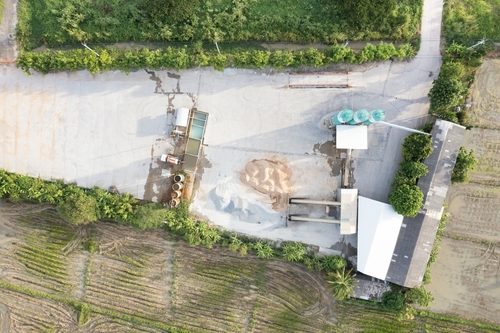


The Low Embodied Carbon Concrete Guide for Ready-Mix Producers

Low embodied carbon concrete is reshaping the construction industry. Cement drives most concrete emissions, so producers must optimize mixes, use SCMs, and track GWP with Environmental Product Declarations (EPD) tools to reduce carbon. Early planning, performance-based specs, and real-time mix adjustments help meet project targets while maintaining strength, durability, and competitiveness.
A recent MIT study estimates that U.S. concrete captures more than 6.5 million metric tons of CO2 each year, equivalent to roughly 13% of emissions from cement production. Research like this has elevated embodied carbon to a key consideration in both public and private infrastructure projects across North America, the EU, and in other parts of the world. Low embodied carbon concrete is quickly moving from niche requirement to baseline expectation across public and private projects.
For ready-mix producers, this isn’t about abstract sustainability goals, but about how mixes are designed, priced, submitted, and adjusted in real time under increasingly strict carbon constraints.
What Is Low Embodied Carbon Concrete?
Low embodied carbon concrete is optimized concrete mix to reduce greenhouse gas emissions without compromising the concrete’s strength, durability, set time, or constructability requirements. The final product ensures emissions would be below an industry or regional baseline, such as the NRMCA regional average or a project-specific GWP limit, for example.

For ready-mix producers, achieving low-carbon concrete means balancing material selection, cement content, and using supplementary cementitious materials (SCMs) while ensuring the mix performs as specified and meets Global Warming Potential (GWP) targets. This way they can stay competitive in bids with consistent performance, and in compliance with increasingly common carbon limits within projects.
Why is Low Carbon Concrete in Demand?
Since 2020, there has been a growing shift incentivizing the use of low-carbon materials. These measures are often optional or limited to specific projects, but not yet mandatory all across the industry. See who’s driving demand:
- Federal agencies: GSA, Department of Defense, USPS, and VA now specify low embodied carbon concrete on infrastructure projects with EPD requirements.
- Transportation: FHWA and state DOTs (Caltrans, WSDOT, TxDOT, NCDOT) are piloting GWP limits in standard specifications.
- State and city governments: Buy Clean laws in California, Colorado, New York, and Washington set maximum GWP values for bridges, transit, and civic buildings.
- Private owners: Tech companies are embedding carbon targets into data centers, warehouses, and other logistics facilities.
- School and institutional projects: LEED, WELL, and other green building certification programs often reward low embodied carbon concrete or require reporting of carbon metrics, influencing design and material selection.
Owners and project teams in the concrete industry are tracking Scope 3 emissions, the indirect emissions associated with purchased materials, so reducing embodied carbon in concrete can significantly affect overall building or infrastructure carbon footprints. Net-zero targets for 2030-2050 cannot be met by operational efficiency alone, but EPDs enable transparency and comparability across the supply chain.
Which Regulations, Standards, and Owner Thresholds Are Shaping Low Embodied Carbon Concrete?
By 2026, embodied carbon rules span federal Buy Clean policies, state procurement laws, and voluntary frameworks like LEED v4.1 and SE 2050. Key programs:
- Federal Buy Clean: GSA requirements for EPDs and GWP limits on concrete for federal buildings (2023-2025 pilots expanding nationally)
- State Buy Clean laws: California, Colorado, Washington setting maximum GWP by concrete category with third-party EPD requirements
- DOT pilots: State transportation authorities introducing GWP performance specs where carbon intensity affects bid scoring
Supporting standards:
- EN 15804, ISO 14025, ISO 21930 provide the rules and guidance for calculating and reporting the environmental impact of construction products, including concrete, through EPD & and Life Cycle Assessment (LCA).
- North American PCR for concrete specifies system boundaries and functional units.
How Low Carbon Concrete Requirements Affect Ready-Mix Producers?
For ready-mix concrete producers, low-carbon requirements are shifting operational and commercial practices even before a bid is submitted. Key impacts include:
- EPDs must be ready before bidding: Producers need plant-specific declarations to respond efficiently to requests for proposals (RFPs).
- Baseline mix data and carbon ranges: Min, average, and max GWP values across a producer’s portfolio must be tracked and documented.
- Pressure to prequalify mixes that meet thresholds: Many projects now require mixes that demonstrate compliance with GWP limits before award.
- Increased coordination with cement and SCM suppliers: Access to low-carbon cement and supplementary cementitious materials (SCMs) is critical to meet performance and carbon targets.
Producers without organized LCA/EPD data risk slower responses, difficulty proving compliance, and lower competitiveness. Estimating must now consider GWP alongside price, as carbon becomes a quantifiable parameter in project evaluation.
Why Carbon in Concrete is Hard to Reduce? The Cement Issue
Cement remains the largest contributor to greenhouse gas emissions in concrete, often accounting for the majority of a mix’s Global Warming Potential (GWP). While Portland Limestone Cement (PLC Type IL) provides a near-term solution by reducing clinker content, its adoption alone isn’t enough to achieve aggressive carbon targets. Supplementary cementitious materials (SCMs) like fly ash or slag can lower GWP, but availability is limited, creating supply bottlenecks. Emerging technologies such as carbon mineralization and alternative binders show promise, yet they are not yet scalable for widespread use. For ready-mix producers, cement availability and mix performance remain critical constraints in meeting low-carbon goals.

Key Strategies to Reduce Concrete GWP
Ready-mix producers have many methods to lower the carbon footprint of concrete while maintaining performance:
- Supplementary cementitious materials (SCMs) like blast furnace slag or fly ash can replace a portion of Portland cement, significantly reducing GWP.
- Carbon capture and mineralization technologies inject captured CO₂ during mixing, where it strengthens the concrete and becomes permanently stored.
- Innovative binders, such as low-carbon bio-concrete, use microbes to create cement at ambient temperatures. This is still an emerging technology and adoption is limited.
- Limestone Calcined Clay Cement (LC3) blends clinker, calcined clay, and limestone to reduce emissions by up to 40%.
- Traditional Portland Cement (PLC), also known as Portland Limestone Cement, uses more limestone in grinding, lowering the clinker-to-cement ratio.
Material sourcing, including the type of cement used and the distance it travels to the plant, also influences the mix’s carbon footprint, making supplier selection and logistics an essential part of carbon management.
How Low-Carbon Requirements Impacts the Full Value Chain
[Recommend adding a graphic of a funnel to illustrate the full value chain impact]
The shift toward low-carbon concrete affects every link in the construction supply chain. Cement producers are adapting by introducing lower-carbon blends and alternative cements, while SCM suppliers face tight availability that can constrain mix design. Ready-mix producers must engage earlier in project planning to ensure mixes meet carbon and performance requirements. Meanwhile, contractors and project owners need to embrace performance-based specifications rather than traditional prescriptive cement limits.
Coordinated efforts across suppliers, producers, and project teams are essential to deliver compliant, low-carbon concrete while navigating material limitations and ambitious carbon reduction targets.
Optimizing Mixes with EPD Tools
Producers are increasingly using EPD & LCA software tools to evaluate mixes before bids. These tools allow tracking of internal GWP ranges by mix class, comparison of alternative mixes, and verification of compliance with project-specific carbon limits. This workflow ensures low-carbon optimization is as routine as monitoring cost or performance metrics.

Successfully producing low-carbon concrete requires earlier and closer coordination with cement and SCM suppliers, as well as maintaining internal databases of mix designs and associated GWP values. Producers must also understand which mixes meet targeted reductions, whether 10%, 20%, or 30% below a baseline, and be ready to adjust in real time if materials or specifications change.
Step-by-step: Concrete GWP Data to EPD
[Recommend adding high resolution screenshots of that process on Climate Earth’s platform]
- Data integration: Producers feed existing plants data (materials, suppliers, energy use, etc.) into the platform during an initial setup.
- GWP calculation: Using Life Cycle Assessment (LCA) methodology tailored to concrete and cement, the software quantifies embodied carbon for each mix and product line.
- EPD generation: Verified Environmental Product Declarations are generated on demand for specific mixes and plants, compliant with PCR standards.
- Optimization & analytics: Users can explore mix alternatives, adjust SCM ratios, and simulate carbon outcomes, all while tracking impacts on strength, cost, and performance.
- Reporting & delivery: Outputs include dashboards, client‑ready reports, and EPD documents that are audit‑ready and usable for procurement, LEED points, or Buy Clean scoring.
By taking carbon intelligence out of spreadsheets and into a real‑time, cloud‑based system, producers can make embodied carbon optimization as routine as cost estimating or strength testing without needing deep LCA expertise.
Low-Carbon Concrete: Where the Industry Is Headed
Low-carbon concrete is evolving quickly and new technologies are shaping the future of the construction industry. A few new developments include
- Electric recycled cement could produce up to 1 billion tons of cement annually by 2050, cutting CO₂ emissions by as much as 2 gigatons.
- Bio-cement made from algae has the potential to offer a carbon-neutral or even carbon-negative way to produce cement.
- Carbon mineralization and LC3 cements are reducing emissions by lowering the need for traditional clinker.
These technologies are moving from concept to widespread use, showing up in major building projects around the world. The industry is becoming more flexible, data-driven, and focused on sustainability than ever before.

Conclusion: Preparing for a Low-Carbon Concrete Future
Low embodied carbon concrete is no longer a niche trend, it is reshaping the construction industry by challenging reliance on traditional cement and setting new standards for concrete emissions. Ready-mix producers must now track carbon, prequalify mixes, coordinate with suppliers, and integrate emissions data into every stage of the workflow to reduce carbon effectively.
Leveraging EPDs and software tools allows producers to optimize mixes without sacrificing performance and meet project-specific GWP targets. See the Climate Earth platform in action to simplify EPD management and ensure bid-ready compliance.
Frequently Asked Questions
Q1: What is embodied carbon in concrete?
Embodied carbon is the total greenhouse gas (GHG) emissions generated during the production of concrete, measured from raw material extraction through production and delivery, commonly called “cradle-to-gate.” This is typically reported in kilograms of CO₂ equivalent (kg CO₂e) per cubic yard or cubic meter and includes emissions from cement production (the largest contributor), aggregate extraction and processing, material transportation, and ready-mix batching operations.
Q2: How is embodied carbon measured?
Embodied carbon is quantified using Life Cycle Assessment (LCA) using Global Warming Potential (GWP) as the primary metric. It follows international standards such as ISO 14040 and ISO 14044, which calculates carbon emissions for all materials and processes involved. The main tool used by producers to report on this is the Environmental Product Declaration (EPD), a verified document communicating the GHG footprint of a specific mix or plant. Industry-average EPDs show typical mixes, while plant- or mix-specific EPDs reflect actual material use and processes allowing producers to compare mixes, evaluate low-carbon options, and comply with project-specific GWP limits.
Q3: How Common Are Embodied Carbon Requirements in Bids?
Owners and project teams are increasingly including embodied carbon limits in both public and private construction projects. Federal and state Buy Clean policies, DOT pilot programs, and sustainability certifications like LEED are making low-carbon concrete a standard consideration, particularly for infrastructure, institutional, and large-scale industrial projects. Ready-mix producers should expect carbon metrics, such as GWP limits, to be part of bid evaluations and submittals.
Q4: Can Low-Carbon Concrete Be Used for Structural and Non-Structural Elements?
Yes. Low-carbon concrete can meet full structural performance requirements, including strength, durability, and set time. Success depends on careful mix optimization, SCM substitution, and adherence to performance-based specifications rather than traditional prescriptive cement limits. This makes low-carbon concrete suitable for a wide range of applications, from foundations and beams to slabs and non-structural elements.
Q5: What Tools Are Used to Measure and Compare Embodied Carbon in Concrete or Cement?
Ready-mix producers typically rely on Environmental Product Declarations (EPDs) and Life Cycle Assessment (LCA) software to calculate GWP for individual mixes. These tools help compare alternative designs, track SCM usage, monitor reductions in concrete emissions, and generate project-ready reports for bidding, compliance, or sustainability certifications.

Find out how Climate Earth can help you win more big business.
Browse all blogs
The Low Embodied Carbon Concrete Guide for Ready-Mix Producers
Concrete & Cement EPDs: A Technical Services Playbook